
Computing services, networks and security
Information technology concerns the creation, processing, storage, retrieval and transmission of information through computers and telecommunications. Support work deals with the equipment, software and people using those systems. Security deals with threats to their information and operation. These subjects overlap: a network may be functioning yet allow inappropriate access, while an authorized user may be unable to complete work because of a hardware or software fault.
The computer-security reference describes threats involving disclosure, theft, damage and disruption of service. Network security concerns the policies, controls and practices surrounding access to networks and their resources. Authentication establishes a user's identity; authorization concerns the access that user is allowed. Security also involves monitoring and detecting misuse. Physical access matters alongside digital controls, because equipment and connections exist in a real workplace.
A network in outline
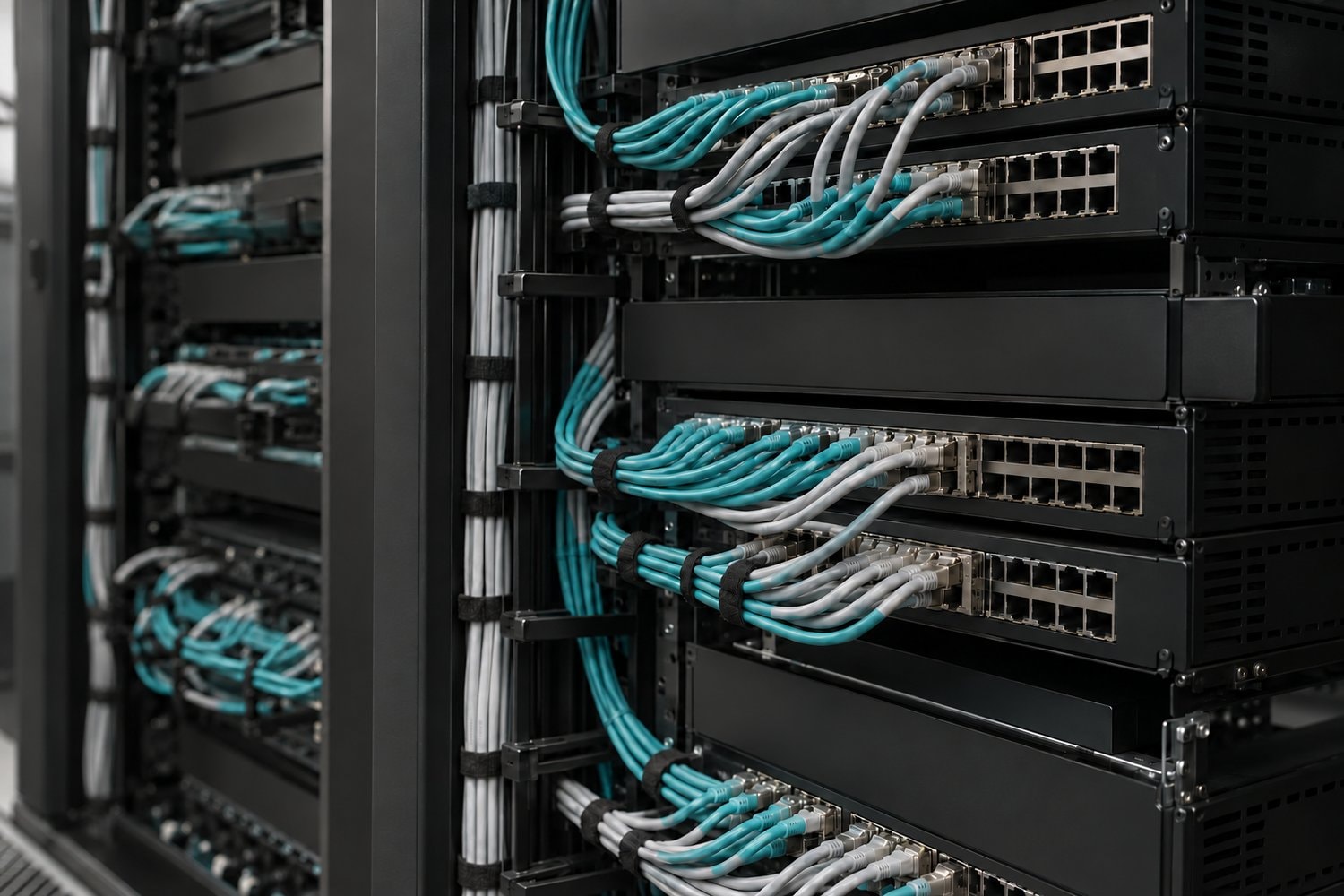
A computer network joins communicating devices, often called hosts. Protocols govern how data moves between them, and networking hardware supports that exchange. Network addresses identify hosts; names provide another way to refer to them. Connections can use copper cable, optical fiber or wireless transmission. Topology describes the arrangement of the devices and connections. These concepts describe the structure behind a user's experience of reaching a shared printer, server or application.
Packet-based networks carry data in formatted units. A packet contains the user's data and information needed to deliver it, including addressing and sequencing information. The network's operation therefore depends on both the physical connection and agreed rules for communication. A workstation, an operating system, network equipment and a remote service can all appear in the same chain. The NSC Network Essentials material reflected this breadth through standards, protocols, hardware, transmission media, local and wider networks, security and management.
Support includes the person using the system
Technical support assists people with problems involving electronics and software. The technical-support reference describes levels of responsibility that match an issue's complexity with the technician's expertise. Frontline staff gather information and address straightforward problems. More experienced staff investigate issues passed to them, while specialist staff consider the most difficult or unfamiliar cases. The number and boundaries of support levels depend on an organization's needs.
The underlying work includes finding out what the user was trying to do, understanding the symptoms and recording what has already been attempted. A symptom is not always the problem itself. The reference describes escalation and the review of earlier work as part of organized support. That makes communication and documentation technical skills in their own right: information needs to remain useful when another person takes responsibility for the issue.
User support and network support
O*NET describes user support as answering questions and resolving computer problems in person, by telephone or electronically. Its tasks include setting up equipment, investigating problems through manuals and diagnostics, discussing needs with users, maintaining records and developing user training materials. Assistance can concern operating systems, printing, installation or ordinary software use. The occupation combines practical equipment work with explaining the system to someone who may use it differently from a technician.
O*NET's network-support description concentrates on analyzing, testing and troubleshooting existing networks. It includes network maintenance, access permissions, security settings, performance information and records of support activity. A connectivity problem can involve a local network, a wider network, servers or other data communications. This account concerns an occupation's tasks; it does not make a credential a guarantee of readiness for every network environment.
What the NSC curriculum covered
The National STEM Consortium cyber pathway combined online learning materials with face-to-face instruction. OLI described mini-course teaching toolkits containing introductions, adaptable syllabi, lesson plans, outcomes and assessments. Online modules addressed areas that commonly challenged students before classroom instruction. The pathway's stated aim was preparation for entry-level roles across industry and government, with opportunities to sit for nationally recognized certifications. Those statements described the NSC curriculum's design.
Its learning outcomes spanned hardware, operating systems, network management, systems life cycles, incident management, troubleshooting and professional communication. Other outcomes addressed risks to organizational data, continuity planning and measures of system performance or availability. The breadth explains why the pathway included core computing knowledge alongside security. Recognizing a component or describing a protocol was connected to interpreting a problem within a larger system.
The model also embedded contextualized refreshers in math, communication and professionalism. Those subjects appeared in relation to technical learning rather than as unrelated background topics. The educators' account of the STEM Bridge explains that historical approach and the role of learning materials in program design. It does not establish that a particular college offers the NSC pathway.
A workforce vocabulary
NICE is NIST's program for coordinating cybersecurity education, training and workforce development. The NICE Framework Resource Center describes a common language for cybersecurity work and the knowledge and skills required to perform it. Employers and educators use that language for purposes including curriculum development, career discovery and workforce planning. The NICE framework explanation distinguishes its structure from the separately maintained components.
Certificates and certifications
An academic program and a professional certification answer different questions. The professional-certification reference describes certification as an external attestation of knowledge or proficiency. It distinguishes profession-wide credentials from product-specific ones and notes that renewal requirements vary. Vendor-neutral IT support, networking and security certifications and networking-vendor certifications can have different scopes. The scope of an assessment matters when comparing these different designations.
The NSC course description recorded the opportunity to sit for certifications; it did not make them identical to completing the academic pathway. For a learner considering the nature of the work, occupation descriptions provide another kind of evidence: they show tasks rather than course titles. The fields side by side compares computing support with materials, vehicle, environmental and automation work using that same distinction.