
Vehicle types describe different energy paths
An electric vehicle uses electric propulsion, but the broader term covers more than battery-powered passenger cars. Electric road vehicles, rail vehicles and watercraft can obtain and store energy in different ways. For the road-vehicle topics considered here, the important distinctions concern the battery, the motor and the presence of an internal combustion engine. A hybrid system and an all-electric system do not have the same path from stored energy to motion.
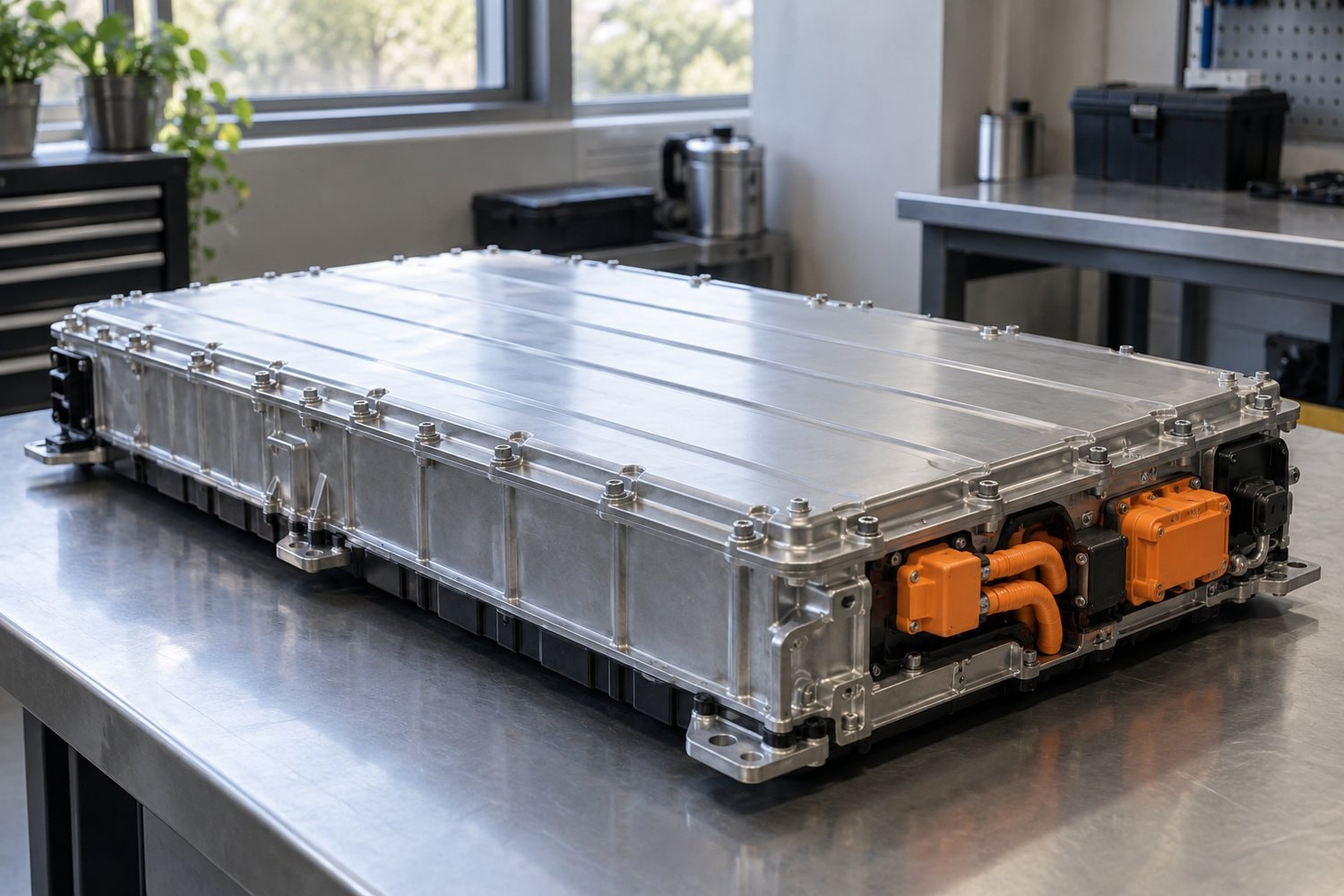
FuelEconomy.gov's all-electric account describes vehicles propelled by electric motors supplied by rechargeable battery packs. Those vehicles run on electricity rather than using an engine as an additional propulsion source. Their traction battery stores energy for driving, and charging replenishes it. The separate traction-battery explanation follows the cells, connections and monitoring inside a pack.
A hybrid electric vehicle combines an engine with electric propulsion. FuelEconomy.gov's hybrid account describes motor assistance during acceleration or climbing and electric-only movement at low speeds in some configurations. It also describes automatic engine stop and restart and energy recovery during braking. The precise division of work between the engine and motor depends on the vehicle's system.
FuelEconomy.gov's plug-in hybrid account describes hybrids with batteries charged from an outlet or charging station. In a series configuration, the motor drives the wheels and the engine generates electricity. In a parallel or blended configuration, the engine and motor can both contribute to propulsion. The term plug-in identifies an external charging capability; it does not describe every detail of the drive system.
Motors and energy recovery
An electric motor converts electrical energy into mechanical motion. In a typical motor, the interaction of current and a magnetic field produces torque at a shaft. The moving rotor and stationary stator form the mechanical basis of the device. Motor construction and control determine how electrical input becomes useful motion. The surrounding system includes the energy source, power electronics and control functions, so the motor is part of a wider vehicle architecture.
Regenerative braking uses the motion of a vehicle to drive a motor as a generator. Energy that would otherwise be dissipated during slowing can return to an energy-storage system. The regenerative-braking reference describes this as energy recovery, while also explaining the need for another braking system. The subject therefore connects the mechanical task of slowing a vehicle with electrical generation, storage and control.
The NSC vehicle learning outcomes reflected that connection. They included motors and controls, power electronic circuitry, charging interfaces, regenerative braking, battery controls and thermal management. System integration appeared alongside component topics. The mechatronics account approaches related electrical and mechanical relationships from the perspective of automation equipment.
Charging and the wider electrical system
The NSC development track was described as broader than vehicle service alone. OLI named automotive, communications, solar, wind turbine and smart grid industries as its intended product-development settings. These were statements of curriculum scope, not forecasts of employment. They explain why the pathway included renewable-energy principles, electronic technology, sensors and control systems as well as automotive subjects.
The smart-grid reference describes electrical networks using communication, monitoring and electronic control. Its account includes distributed resources, energy storage and the charging of parked electric-vehicle batteries. Charging thus connects a vehicle's stored energy to an external electrical system. A development curriculum can discuss that relationship while a service curriculum focuses more closely on vehicle operation and diagnosis. The distinction concerns the technical setting and purpose of work.
The historical NSC pathway
The National STEM Consortium combined online modules with face-to-face instruction in its vehicle pathway. OLI described teaching toolkits with course introductions, adaptable syllabi, lesson plans, outcomes and assessments. Online lessons and drills supported classroom instruction. The development and service tracks shared a broad electrical and automotive subject base, while the curriculum's stated applications distinguished product development from service work.
The listed topics included advanced energy storage, automotive systems, electric and hybrid technology, data acquisition and sensors, electronics, engine fundamentals, motors, controls and technical math. Its outcomes covered high-voltage distribution, battery systems, thermal systems, tools and system integration. These topics show why electrified vehicles still require an understanding of mechanical and conventional automotive systems alongside electrical theory. The course description is a historical account of that curriculum.
What related occupations involve
O*NET describes automotive service technicians and mechanics as diagnosing, adjusting and maintaining vehicles. Tasks include examining systems, recording findings, reviewing work information, discussing problems with customers and using electronic diagnostic equipment. The occupation extends beyond electrified propulsion: brakes, steering, heating, cooling and other vehicle systems remain within its description. A field label therefore should not be mistaken for the full scope of an occupation.
O*NET's electrical and electronic engineering technologist and technician account describes work usually performed under engineering staff's direction. It includes building, adjusting and testing components, circuitry, controls and machinery for engineering evaluation. Tasks cover interpretation of drawings, use of test equipment, documentation, functional specifications and prototypes. This perspective makes the development side clearer: measurements and records support decisions about a design, rather than simply returning a vehicle to service.
High-voltage work requires training
Vehicle high-voltage systems are an electrical hazard, and work on them belongs to trained, qualified technicians under appropriate supervision; OSHA's electrical overview describes risks of shock, electrocution, fire and explosion and emphasizes employee training. The NSC curriculum included high-voltage safety as a learning topic, but a description of that topic cannot qualify a reader to perform electrical work.
The physical setting also matters: service and development involve tools, equipment and technical tasks in real workplaces. The technician's body at work provides a broader account of physical exposures across technical jobs. It complements the electrical-hazard context without replacing employer training or the requirements governing a particular workplace.