
A machine viewed as a system
The mechatronics reference describes the integration of mechanical, electrical and computer systems. That definition is useful because a production machine's behavior crosses those boundaries. Movement belongs to mechanical equipment; power and signals belong to electrical equipment; control logic determines how the system responds. Mechatronics brings those subjects together so that the machine can be understood as a coordinated whole.
A technician may therefore read a mechanical drawing and an electrical schematic within the same assignment. A dimensional problem, an electrical signal or a control setting may matter to the functioning of the equipment. The subject does not replace specialist knowledge. The NSC curriculum explicitly included recognizing when a malfunction required another area of expertise. It combined foundational principles with technical documentation, problem-solving and communication, rather than defining the role only by a particular machine.
Automation and robotics
Automation uses predetermined relationships and decision criteria to reduce direct human intervention in a process. It can combine mechanical, hydraulic, pneumatic, electrical and computing methods. A robot is a particular kind of machine within that broader subject. Robotics includes its design, construction, operation and use; the machine's physical structure, power source, controls and software all matter. Understanding an automated process therefore involves both its intended action and the equipment that carries it out.
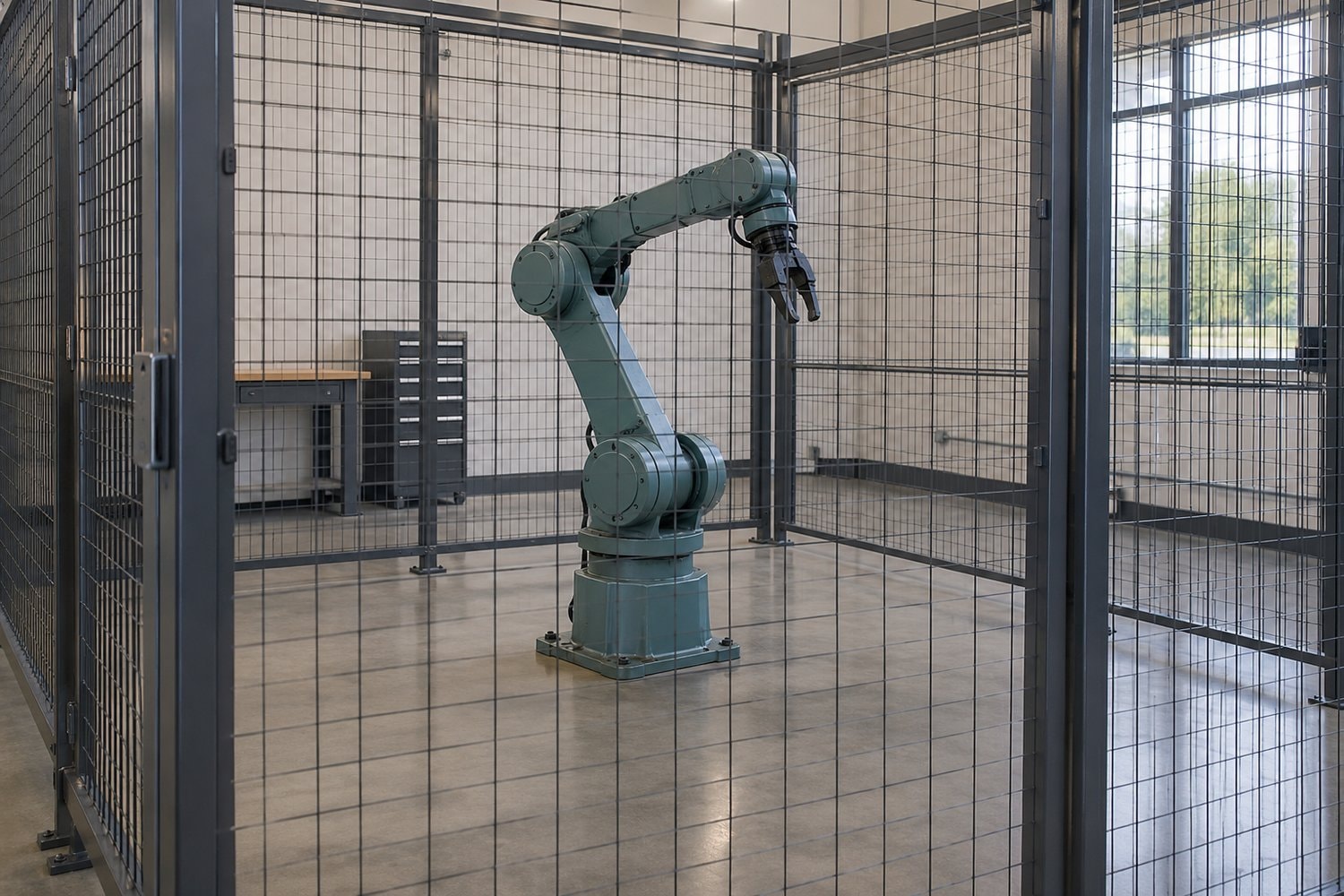
Industrial robots perform manufacturing tasks such as material handling, assembly, welding, inspection and packaging. Their programmed movement is part of a larger production setting. The machine may depend on nearby equipment, parts arriving at the right location and signals about the process. A robot technician's work consequently includes related controllers, sensors, conveyors and end-of-arm equipment. Robotics is connected to automation, while automation also includes processes that use no robot arm.
Fluid power belongs in the same picture
Hydraulics uses the mechanical properties of liquids. In a fluid-power application, pressurized liquid transmits and controls power. Pneumatics uses gas or compressed air to produce mechanical motion. Industrial pneumatic systems commonly include compressors, cylinders, air motors and other actuators. These are different working media, but both subjects connect a control decision to physical movement. Their presence explains why an automation curriculum extends beyond electrical wiring and programming.
O*NET's mechatronics task description includes hydraulic and pneumatic assemblies as well as electrical and mechanical components. Its robotics profile lists knowledge of those systems among the resources used in troubleshooting. A general learner can recognize how the subjects relate without being qualified to work on a pressurized system. The details of valves, motion and stored energy belong within formal technical instruction and the workplace's safety arrangements.
Connected equipment and maintenance
The industrial internet of things connects sensors, instruments and other devices with industrial computing applications. It supports collecting, exchanging and analyzing operating data. At the equipment level, that means a machine can be part of a wider information system as well as a physical production line. The controller, sensor and actuator relationship explains the local control concepts behind such systems.
Maintenance has several forms. Preventive maintenance involves planned checks and service. Corrective maintenance follows a malfunction or breakdown. Predictive maintenance examines the condition of operating equipment to estimate when work may be needed. These terms describe different reasons for scheduling attention to equipment. Monitoring and records help characterize a condition, while inspection, test results and information from machine operators contribute to diagnosis.
The role of documentation is easy to overlook when a machine occupies most of the attention. O*NET includes service records, test results and technical drawings among technician tasks. Those records connect an observed problem with the work performed and with the next person responsible for the equipment. Technical literacy therefore includes interpreting the documents that describe a machine and producing records that describe its condition.
The consortium's mechatronics curriculum
The Open Learning Initiative's mechatronics pathway description records the National STEM Consortium's one-year, 30-credit hybrid course, organized into 12 mini-courses. The pathway brought online instruction together with face-to-face learning. It included electrical systems, mechanical systems, industrial robots, manufacturing subjects, technical drawing and a capstone. Teaching toolkits supplied course introductions, adaptable syllabi, lesson plans and assessment materials; online drills addressed concepts that students commonly found difficult.
OLI lists safety, applied mathematics, foundational principles, troubleshooting, documentation, communication and collaborative work among the curriculum's broad outcomes. Mathematics included algebra, geometry, trigonometry and digital logic applied to technical problems. Students were expected to interpret blueprints, schematics, manuals and other documents, and to create work records and equipment logs. This was the consortium's curriculum model, rather than an announcement of an available certificate.
Related occupations, distinct duties
O*NET's electro-mechanical and mechatronics profile describes operating, testing, maintaining and adjusting automated or electromechanical equipment. Its tasks range from testing assemblies and verifying dimensions to preparing drawings, programming equipment and recording test results. The combination of subjects is reflected in the occupation: technical work can involve the physical assembly, its circuitry and its control system.
O*NET describes robotics technicians as building, installing, testing and maintaining robotic equipment and related automated systems. Industrial machinery mechanics work on industrial production and processing machinery, with tasks that include examining wear, observing operation, interpreting test results and maintaining records. These descriptions show overlapping knowledge with different emphases. Machining and tooling connect to composites fabrication and CNC work, while motors and electrical equipment connect to electric vehicle technology.
Safety includes non-routine work
OSHA's robotics overview reports that many robot accidents occur during programming, maintenance, testing, setup or adjustment. Such work can bring a person within the machine's operating space, where unintended movement is hazardous. OSHA's machine-guarding overview likewise states that machine parts, functions and processes that may cause injury must be safeguarded. These responsibilities remain part of the system even when production is paused.
Machinery must be isolated from hazardous energy before servicing under OSHA's lockout/tagout standard. OSHA includes electrical, mechanical, hydraulic, pneumatic, chemical and thermal energy among the sources that may require control, and assigns employers responsibility for the energy-control program and worker training. This is a requirement for qualified workplace practice, rather than a procedure a general page can teach. The technician's body at work adds the physical-task and ergonomics context to this machinery-safety picture.