
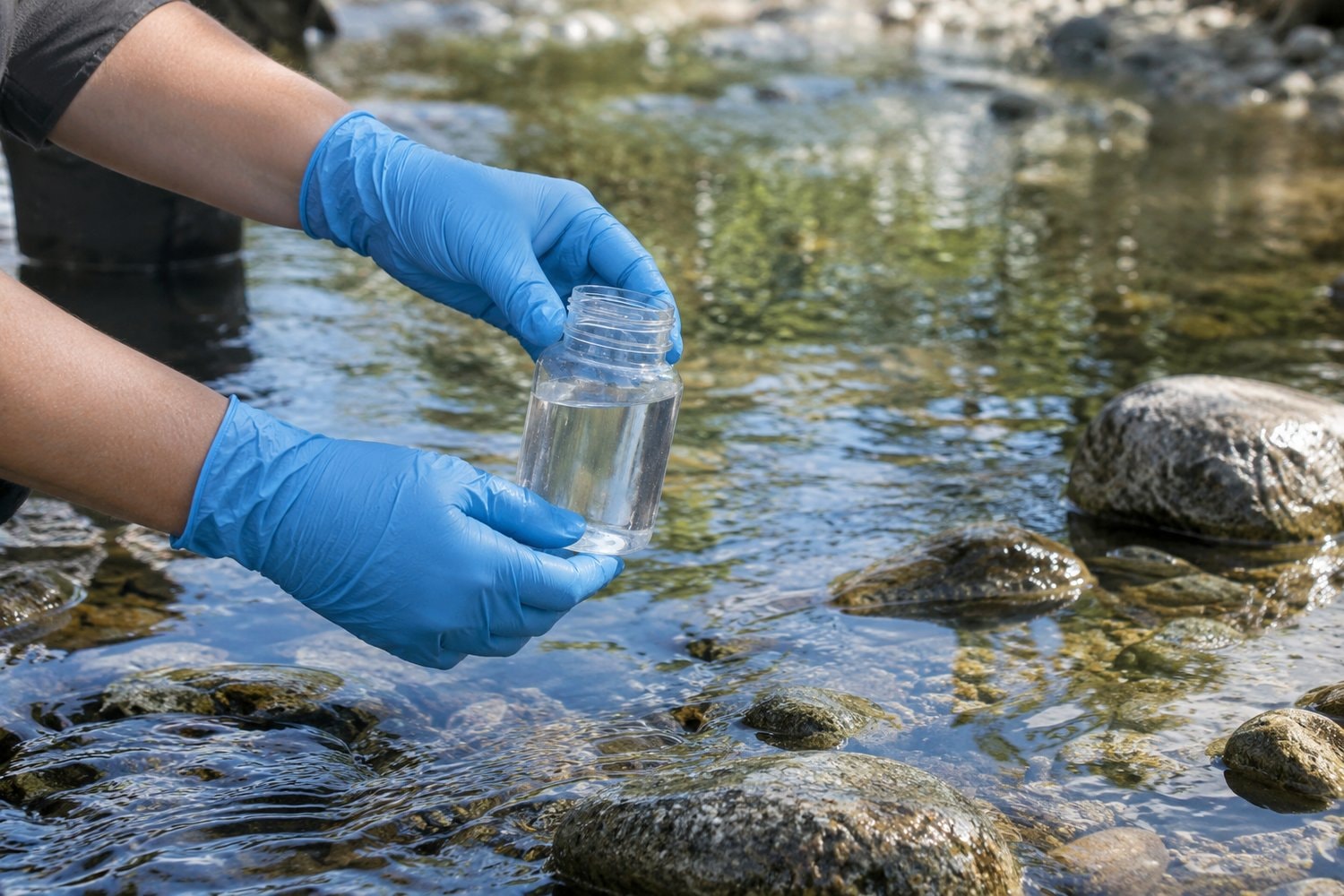
Monitoring makes a condition measurable
Environmental technology applies environmental science, monitoring and technical equipment to questions about natural resources and human activity. Its scope includes water, air and waste. Environmental monitoring is the part concerned with describing a condition, establishing a baseline and examining how that condition changes. A monitoring program begins with a purpose for its data: the measurements needed to examine water pollution may differ from those needed to characterize airborne particles at a workplace.
Field and laboratory work belong to the same process. A sample from soil, air or water becomes useful evidence through testing, a clear record of the result and interpretation within the investigation. Monitoring may describe present conditions or examine trends. It is more than taking a reading from an instrument. The environmental-science technician occupation also includes instrument calibration, preparation of samples, calculations and reports. Readers interested in measurements in rivers, drinking-water systems and treatment plants can continue with water-quality monitoring.
Hazardous material and hazardous waste
A hazardous material and a hazardous waste are related ideas with different regulatory contexts. Dangerous goods are materials that present risks during transport; hazardous materials can present risks outside transport as well. A waste is material that is discarded or otherwise falls within a regulatory waste definition. It may be hazardous because of its properties. The description covers more than visibly damaged containers or unusual industrial chemicals: waste can occur as liquids, solids, gases or sludge, and its classification depends on the applicable rules.
The Environmental Protection Agency's hazardous-waste overview describes a management system that follows regulated waste from generation through transport, storage, treatment and disposal. Under the Resource Conservation and Recovery Act, generators must determine whether their waste is hazardous and document its management. EPA explains that the identification process considers whether a material is a solid waste, whether an exclusion applies, and whether it is a listed or characteristic hazardous waste. Those are regulatory concepts, rather than a checklist for an untrained reader to classify a container.
Responsibility continues as waste moves between organizations. Transporters move regulated material to facilities with different functions, including recycling, storage and final disposal. EPA describes treatment, storage and disposal facilities as stringently regulated because of the waste they handle and the activities they perform. Its RCRA resources also cover state authorization, policies and guidance. State generator requirements may be more stringent than federal requirements, so a broad description of the field cannot settle a particular workplace's obligations.
HAZWOPER is a training framework
Hazardous-waste operations and emergency response are covered by OSHA's HAZWOPER standard, which appears in its hazardous-waste standards; the HAZWOPER reference describes training requirements tied to the employee's work and the hazards involved. The reference also describes supervised practical training for site workers and the involvement of a trained, technically qualified person. This work requires formal training and qualified supervision.
The distinction between ordinary work at a facility and emergency response matters. The HAZWOPER reference covers cleanup at hazardous-waste sites, corrective-action work, regulated treatment and disposal operations, and responses to releases or threats of release. The required competence varies by role. Recognizing that a training requirement exists does not authorize a reader to handle a substance, enter a restricted space or respond to a release. A field curriculum can introduce the subject while the employer remains responsible for the actual work and its safety requirements.
Industrial hygiene and protective equipment
Industrial hygiene, also called occupational hygiene, examines workplace exposures. It involves anticipating and recognizing hazards, evaluating exposure and considering controls. Its subject matter includes chemical, biological, physical, ergonomic and psychosocial hazards. Measurements help characterize what workers encounter and under what conditions. This is why environmental work can extend from an outdoor sampling location into a production area: workplace air, noise and other exposures are also subjects of technical investigation.
OSHA describes personal protective equipment as equipment worn to limit exposure to workplace hazards. Its examples include gloves, eye protection, hearing protection, respirators and protective clothing. OSHA places PPE within a program that addresses the hazards present, equipment selection and maintenance, employee training and evaluation. Employers must train workers who are required to use it, including on its limitations. Equipment selection is therefore a workplace responsibility connected to the particular hazard. The broader relationship between physical tasks and the body is discussed in working safely in technical jobs.
The environmental pathway as curriculum history
The Open Learning Initiative's environmental technology course description records the National STEM Consortium's one-year, 30-credit hybrid pathway, organized into 12 mini-courses and two tracks: HazMat, Safety, and Health; and Water Quality. The curriculum included online activities alongside face-to-face instruction. Its teaching materials included course introductions, adaptable syllabi, lesson plans and assessment resources. Online mini-lessons and drills addressed difficult concepts before classroom instruction.
OLI described learning outcomes across water quality, air quality, ecosystems, instruments, data, hazardous materials, worker protection and government regulations. Students were expected to interpret and calculate environmental data, understand instruments, recognize workplace hazards and describe relevant rules. The course description also recorded opportunities for graduates to earn federal certificates from EPA and OSHA. That statement describes the consortium's pathway; it is not a statement about an available college program or about a reader's qualification.
Occupations with different responsibilities
O*NET's environmental science and protection technician profile describes laboratory and field testing under the direction of a scientist, engineer or other specialist. Tasks include collecting samples, recording test data, preparing charts and reports, calibrating instruments and discussing analyses. The work combines observation, practical measurement and communication. Records are part of the technical task because a result must be usable by the people evaluating a pollution problem or workplace condition.
O*NET describes hazardous materials removal workers as identifying, removing, packaging, transporting or disposing of hazardous materials. That occupation includes prescribed safety requirements and tracking materials as well as physical removal work. Its description states that specialized training and certification in hazardous-materials handling, or a confined-entry permit, are generally required. These occupations overlap in environmental subject matter but differ in duties and authority. The comparison of the five fields places this mixture of monitoring, regulation and field work alongside the other technician pathways.